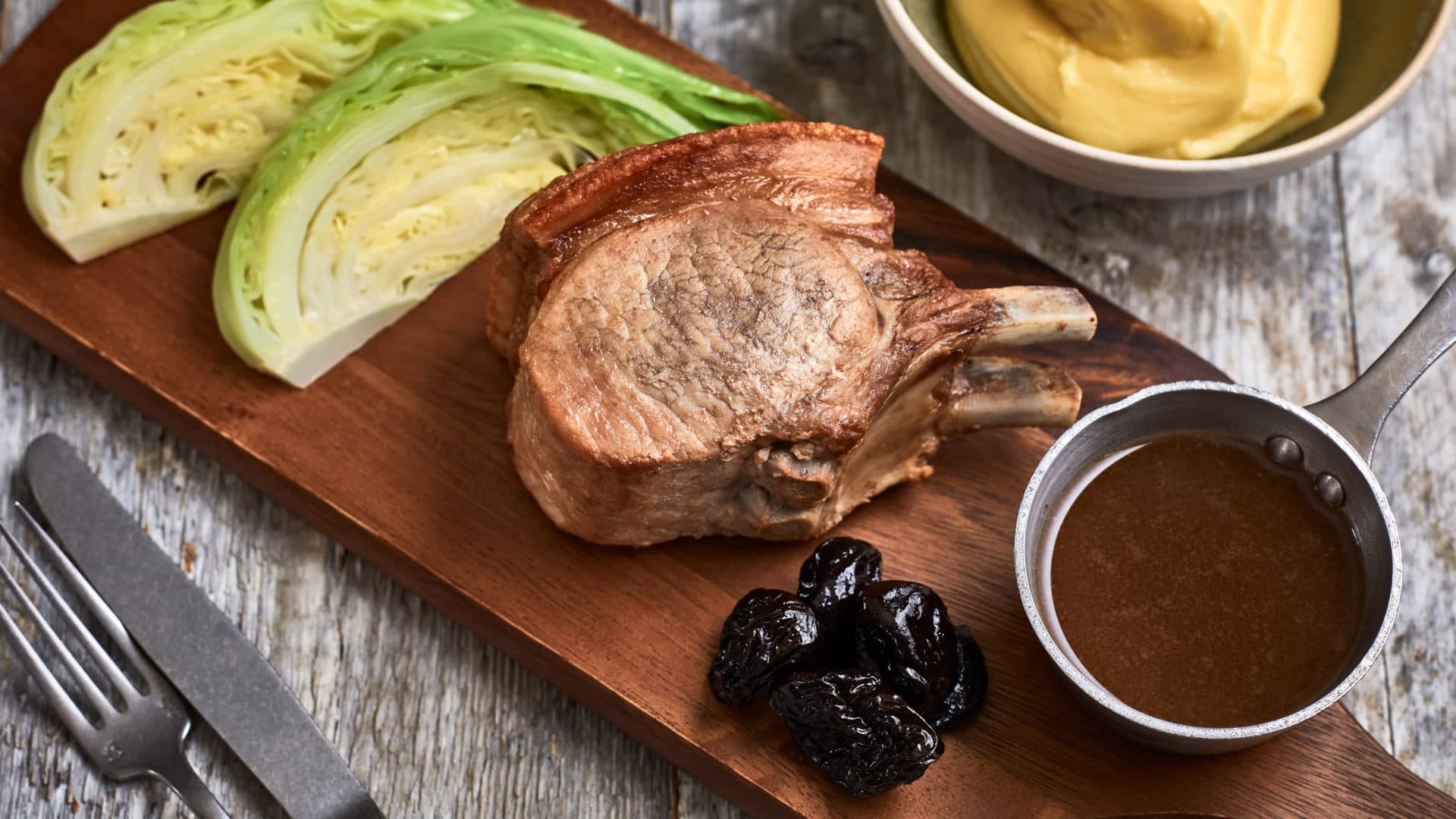
Pork chop with prunes
My mother used to cook this recipe on special occasions
This recipe is from my cookbook: Le Manoir aux Quat'Saisons: The Story of a Modern Classic
Ingredients
For the pork loin
- 500g (2 bone thick chops)Pork loin, bone in, skin on and French trimmed (ask the butcher to do this for you, but keep all trimmings.)
- 150gPork trimmings
- 50mlWater
- 1 pinchSea salt
- 150mlWater or brown chicken stock
- 30mlSunflower oil
- 30gUnsalted butter
- 1 cloveGarlic, peeled and crushed
- 1 sprigFresh thyme
- 2 leavesFresh sage
- 50mlMadeira wine
- 6Prunes, d’Agen (de-stoned and halved)
- 45ml / 3tbspCognac
Method
- 1
Stir in the prunes in the cognac and leave to soak 12 hours prior to cooking.
- 2
Preheat the oven to 120°C.
In a medium ovenproof frying pan on a low-medium heat, add the oil, season the meat with salt and place skin side down in the pan for 10 minutes.
Start with one edge for 5 minutes, then turn it onto the other edge of the skin for a further 5 minutes, ensuring the whole skin is evenly browned and crispy.
Once an evenly crisp skin has been achieved, remove the pork from the pan, discard the oil.
- 3
Add half of the butter and, on a medium heat, bring it to a light hazelnut stage. Return the pork to the pan on its flesh side, reduce the heat a little and pan-fry for 5 minutes.
Do not move the pork, so the juices run out to create a beautiful residue on the bottom of the pan. It should be a gentle sizzling noise, not aggressive.
Once a golden brown colour has been achieved on one side, turn the meat over to cook the other side for the same amount of time and add the trimmings. Baste the chop with the foaming butter.
- 4
Meanwhile, in a separate small frying pan on a medium heat, add the remaining butter and the pork trimmings. Brown for 5 minutes, but do not stir.
Add 50ml water and de-glaze the pan. Transfer the trimmings and all the juices to the pan with the pork.
Place the pork on top of the trimmings. They will serve as a trivet to keep the meat away from direct heat and allow the heat to circulate.
Add the garlic, thyme and sage.
- 5
Transfer the pan to the preheated oven and roast for 30 minutes until you reach a core temperature of 60°C.
Baste occasionally.
- 6
Remove the pork from the pan and leave to rest on a plate for 15 minutes, covered with tin foil. Some wonderful things will now happen!
As the meat relaxes, the juices will flow out, and at the same time, the temperature of the meat will continue to rise, up to 65-66ºC. There is a mistaken belief that resting is only to relax the meat.
It is true the heat contracts it, but the heat has momentum and energy of its own, and during resting, the temperature can rise by up to 20% in 30 minutes. Then it will decline.
- 7
Place the frying pan back on the stove on a medium heat, add the pork juices from the plate and de-glaze with the Madeira.
Boil for a few seconds.
Add the water and, using a spatula, stir thoroughly to incorporate all the residue created during the roasting.
Taste and correct the seasoning, strain the jus and return to the pan.
- 8
Add the soaked prunes and simmer gently for 3-5 minutes.
Strain.
Serve with potato purée and steamed cabbage.
You can choose to carve the meat in front of your guests or in the discretion of your kitchen.
Chef's Tips
“"Other meats can be cooked this way; for example, a large rib of beef, a veal chop, or a simple pork chop. They invariably provide a quick and delicious meal for the family." "Plums, damsons, apples, mirabelles and other fruits could accompany this dish."
Cooking is always an expression of care and generosity. Enjoy this dish.
Bon appétit!