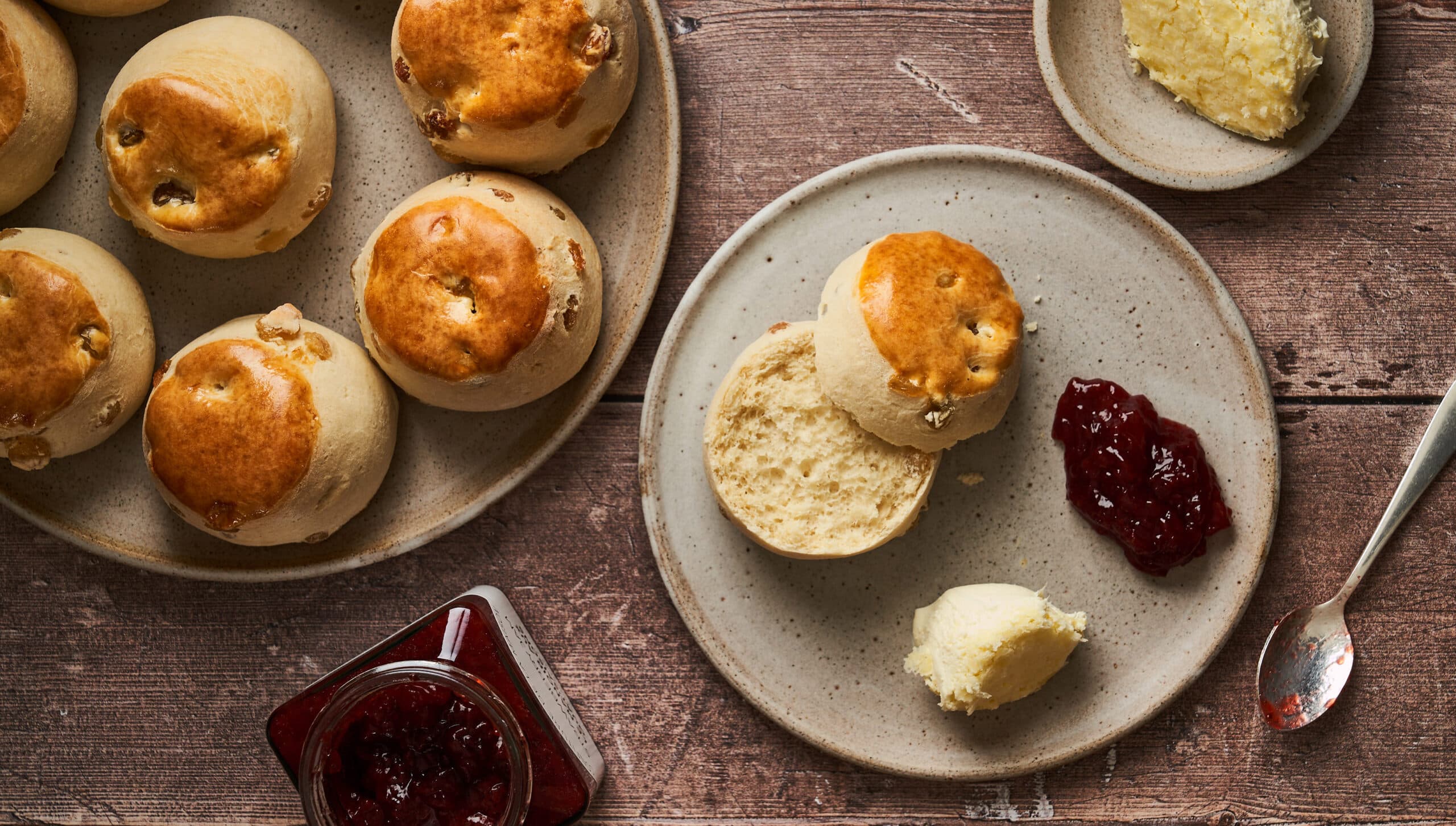
Fruit Scones
My favourite treat on a lazy Sunday afternoon.
This recipe is from my cookbook: Le Manoir aux Quat'Saisons: The Story of a Modern Classic
Ingredients
For the dough
- 500gPlain Flour
- 35gBaking powder
- 1 PinchSea salt
- 75gUnsalted butter, cold and cut into 1cm cubes
- 100gCaster sugar
- 150gGolden sultanas
- 2Eggs, medium, whisked
- 170mlMilk
- 2Eggs, beaten for the egg wash
Method
- 1
Preheat the oven to 190ºC/ 170°C fan / gas 5.
Line a baking tray with greaseproof paper, ready for the scones.
- 2
In a large bowl, sieve together the flour and baking powder and salt. With your fingertips, rub in the cold butter to create a crumble-like texture.
This will take about 4 minutes. Stir in the sugar and sultanas.
Whisk together the eggs and milk. Now make a well in the centre of the flour mixture and fold in the egg-milk mixture to form a dough.
Place the dough onto a lightly floured surface and gently knead it by hand for about 5-6 minutes until it’s smooth. (Do not overwork the dough as it will strengthen the gluten in the flour and make the texture too dense.
)
- 3
Roll the dough to a thickness of about 2. 5cm.
Now dip a 5. 5cm diameter cutter in flour and cut out as many scones as you can, approximately 10-12.
As you do this, place the scones upside down on the lined tray, so there’s a nice flat top to each scone. Brush the top of each scone with the egg wash and leave to rest at room temperature for about 30 minutes.
(Here you will witness is a glorious little miracle – slowly the baking powder is activated by the warmth, creating thousands of tiny bubbles of carbon dioxide in the dough and its volume will increase by 10-15%. ) Bake for 10 minutes.
Then transfer the scones to a wire rack – even though they are irresistible, you must leave them to cool.
- 4
To serve A large pot of Cornish or Devonshire clotted cream. The best strawberry or raspberry jam.
Serve the scones at room temperature. Use a serrated knife to cut the scones in half across the middle, and enjoy your scone just the way you like it.
One of the great classic British tastes. And please don’t squabble about which goes on first, cream or jam.
Cooking is always an expression of care and generosity. Enjoy this dish.
Bon appétit!